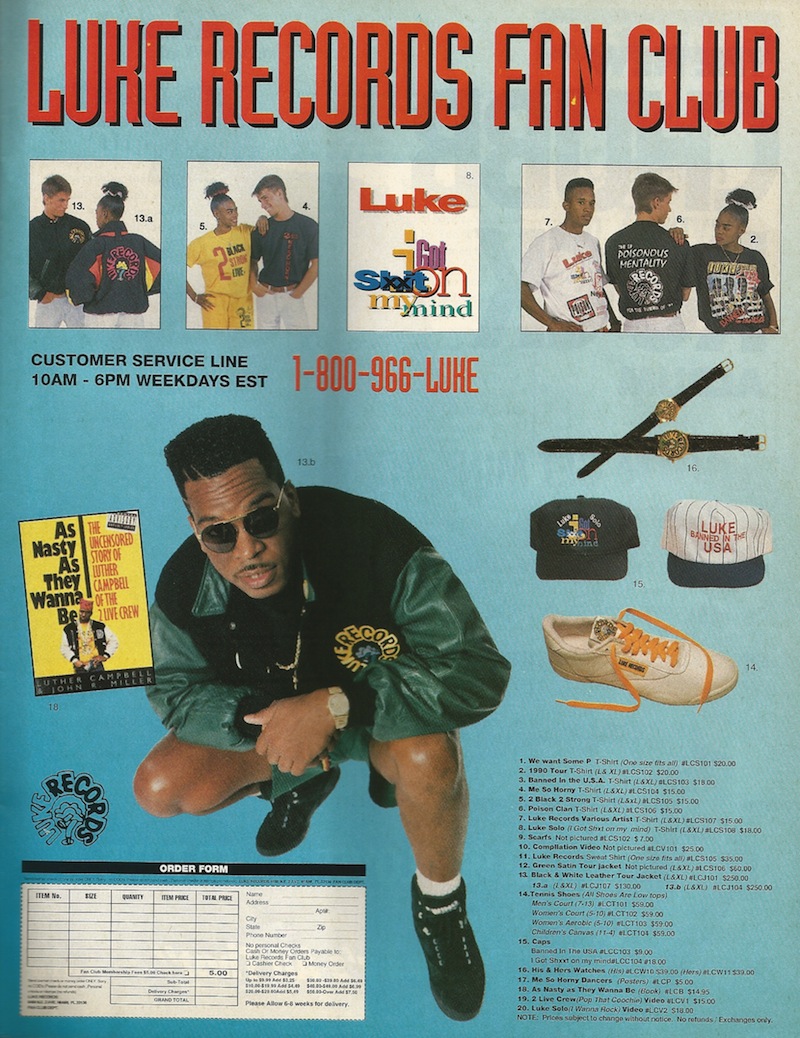

We began this unit with Luther Campbell's wild antics in Hip-Hop to discussing racial melancholia and collective grief. Yet, Campbell's is more complicated than his escapades; after all, he's provided so much for the youth of Liberty City who wouldn't otherwise have a chance to excel.
And, Brad Jordan, aka Scarface, seems to also exemplify complexity with his admitted battles with bi-polar. We can imagine perhaps some of his anger stems from a hard life as well as his mental illness.
Today, some of you indicated that you had learned to endure with the racial macro and micro-aggressions. Yet, I still believe 'dealing' with them somehow normalizes them. Therefore, I have a question that remains, so I'll pose it here. Despite Luther Campbell's contributions to Hip-Hop, Brad Jordan's success as a Hip-Hop lyrical genius leaving us with hits like "Smile" and "Mind's Playing Tricks," do you foresee a time where racial melancholia doesn't exist; accordingly, will Hip-Hop ever fully heal from our collective grief?
Due: Fri., 4/20/18 by the beginning of class.

To answer plainly, no. I do not see a time when racial melancholia will not exist. As long as incidents occur like black men being kicked out of Starbucks for no valid reason and a man being shot multiple times from a helicopter in his grandmother's backyard, there will always be racial melancholia displayed in music and all other art forms. The grief will always be displayed and expressed in black in dramas performed in theatre, dance, and heard in Hip Hop music. Whatever is being done in the streets will be highlighted and emphasized in the music we hear.
ReplyDeleteThe incidents that Brad Jordan sheds light on in songs like "My Mind Playing Tricks On Me" and "Smile" is the strife and stress that is inherent growing up poor in America. As long as people are underprivileged, there will be songs, movies and raps to accompany what is going on in the world. As far as Luther Campbell goes when dealing with sexuality in Hip Hop, there will most likely always be misogyny. As long as we as a people are sexual beings, we will run into incidents dealing with women being disrespected and looked at as objects rather than people.
The black community has participated in creating a stigma when it comes to black art. The common overarching themes found in a majority of the music produced by black artists would be storytelling, hyper masculinity, hyper sexuality, and pain. You will find one of these elements in almost everything you see and hear. Women are not respected whether they are white or black or other; they are worshipped mainly for their body and not seen useful for anything rather than sex. https://www.youtube.com/watch?v=73G5E2kgdFo Here, Luther Campbell briefly addresses the issue of sexuality in Hip Hop and how easy it could be ended.
The black man always deals with police brutality and other stereotypes that help mold a negative image of what all black men are like. Men in general are seen as powerful beings who reign over women. This music is being played around young children and has begun to shape their view on life at ages as early as four. The only way to end this pattern is to stop exposing young children to the way of life of those who have come before them and allow them to cultivate their own views and beliefs.
I do not forsee a time where racial melancholia does not exist. This melancholia is rooted in nearly 400 years of pain and loss. This derives from my idea that racism itself will never die there for the melancholia we experience will never die. Racism has been imbedded in people for hundreds of years, however most importantly it is embedded in the systems that govern our country. Our country thrives off of these racist systems. So if someone in power is benefitting from our oppression why would it ever change, because its the right thing to do? I doubt it. The pain and loss we experience from these systems will not cease until they change.
ReplyDeleteJust as the America thrives on racist systems, ironically and as sad as it is to say, Hip Hop thrives on the oppression, the pain, the struggle, the collective grief. If Black people were not being systematically attacked many would not be able to relate, and feel the pain that these rappers relay to us. Part of the reason I pick an artist is because I can relate, and understand their message. In my opinion, Hip Hop thrives on this collective grief, this collective pain, these common struggles that seem to be almost universal in Black communities. I believe Hip Hop is capable of healing from this collective grief if the cause of our grief were to miraculously change. If racism and oppression died then hip hop could move on. But as stated previously I do not personally believe these things will change. There for the purpose of hip hop is speak out about these things, bring awareness to the issues, and talk about the affects of them and how they makes us feel. Attached is a song by Common titled Glory. This is a song that speaks to this very message and glorifies the real purpose of hip hop. Hip Hop is nearly an affect or reaction to the things going on around us.
https://youtu.be/HUZOKvYcx_o
I do not ever believe racial melancholia will not exist, simply because many white people don't even see their privilege. Racism is very deeprooted in American ways that we as black people do not even see it. If people do not know the issue there will never be a way to correct this issue.
ReplyDeleteI
https://www.youtube.com/watch?v=swDQiUwmezg.
This is a short video showing how many White American people do not even see the problem. I found this video to be very witty but still gets the point across. Even on the street signs. There are buildings, streets, and "historical" landmarks named after slave owners and people who were openly racist towards black people. Even black people do not tend to pay attention that the oppression is all around, not just in the way we are treated but buildings and landmarks around us.
I feel that there won't be any drastic changes within hip-hop because the racial prejudice will forever be around us. Hip hop's origins began in clear racism against poor black people in the Bronx. From that being the origin of hip hop, hip hop continues to be about struggle and oppression. The industry also likes to glorify blacks in a negative way, so I do not feel hip-hop will heal.
I don't foresee a time where racial melancholia doesn't exist. It's so ingrained into the American cultural identity, especially in that of the oppressor.
ReplyDeleteThe attached video humorizes racial microaggressions, which are extremely telling of the way racism is so deeply rooted into the psyche of the oppressor. The video shows how casually and thoughtlessly the oppressor assigns prejudices to the racial "Other." But even more interestingly, they show how racism is so normalized that the oppressed don't always recognize it, and that's why I think racial melancholia will always exist.
https://www.youtube.com/watch?v=KPRA4g-3yEk
I do not think that racial melancholia will ever dissipate. I think this because of the fact that communication is not enforced and white Americans never fully recognize the caliber of their privilege. Communication is a key factor because both ends of the spectrum have issues with the opposing side but neither realize where the problems stem from nor the way to properly address them. The previously viral video entitled "I'm Not Racist" by Lucas Joyner https://www.youtube.com/watch?v=43gm3CJePn0 explored the "non racist" view from the perspective of both black and white. Racial melancholia can not ever fathom existence unless the issues inherited by the black community are understood and handled with a non racist and stereotypical lense.
ReplyDeleteIn the Tupac: The Lost Prison Tapes interview he spoke on mass incarceration and the black community. Hip Hop has become a contest awarding bragging rights to the individual that has spoken about having the most sex, done the most drugs, killed the most, and that have experienced the most traumatic experiences. Yes, as J.Cole said "there is beauty in the struggle, ugliness in the success" however, modern day rappers have allowed the "struggle" and their obsession with success to overshadow the real reason they perused music. If hip hop doesn't remove the element of braggadocio then toxic masculinity and hypersexualized lyrics will overshadow the struggle recognized by the majority of the African Americans and the underlying truth in music.
I don't think that racial melancholia will cease to exist in America. It will require some deep uprooting in the government and discomfort and inconvenience for people who will never voluntarily put themselves in that situation.
ReplyDeleteIn the video below they asked the question what would the world look like without black people. I know this video is a little watered down, but I noticed how some people were truly stuck when they were asked this question. Not even just the white people.
It can be hard to see how people who are placed under such economic, social, and political limitations impact the world. The oppressors don't see or aren't affected it's irrelevant to them. The people who are oppressed don't see how they impact the world because it's not relevant to the people who "run" the world; and when they don't see their everyday value and they begin to believe that they are irrelevant. I mean the white guy literally answered well we wouldn't have a president......
https://www.youtube.com/watch?v=7TkteKQhXz0
There's this saying I hear a lot, some people just don't know how not to struggle. This old saying directly relates to hip hop and our collective grief. Black culture was built on grief and struggle. It's like the black community feels that if we somehow find happiness we will loose touch with our ancestors. We glorify the negative images that the media portrays us as, and we believe the only way to make it out the hood is to drop a bomb ass mixtape.
I think we are privileged to be where we are today. Not everyone had the parents, or the drive, or whatever it took to get you at A&T. But I think its are duty to at least educate the people around us on the little things. If every black person who made it to college went back and made sure someone else went to college because of them, I'm sure we wouldn't be as far behind as we are now.
Racial melancholia will always exist, because racism will always exist. The only time it won't exist is in a perfect world, and unfortunately this world wasn't meant to be perfect. Ignorance is something that will always remain because of inability to understand another culture. Racism evolves, but never disappears. There will always be a new form of Jim Crow to remind us that we are supposed to be the inferior race. This is the reason why Hip Hop will never fully heal from its collective grief.
ReplyDeleteIn the attached video, scenes from the popular film "Get Out" are used to explain common micro aggressions black people have to experience and put up with on a daily basis. Even though blacks are not the ones in the wrong, they are the ones who have to apologize and act like everything is okay, which is not okay. Even though we act like we aren't bothered by this, it will always be a reminder that we are behind, and will never be at a point where people are understanding or not ignorant. https://www.youtube.com/watch?v=QFSkLZzjx0w
I feel that if racial melancholia disappeared, so would the music in a sense. Lots of music created by African Americans comes from a place of depression due to oppression, including Hip Hop. In saying this, I mean that Hip Hop will remain in a state of racial melancholia until change occurs...so it will always remain.
Unfortunately, I do not think that there will be a time where racial melancholia does not exist. Now more than ever, racial macro and micro-aggressions that black people are often times expected to ignore are extremely abundant. I can admit to ignoring these things as well, because it is simply easier to not cause a scene every time I see a form of macro or micro aggression. In today's society it has become so prevalent that it is seen as normal and expected and accepted. There are so many Americans that already believe that racism does not exist so they just contribute to the problem.
ReplyDeletehttps://www.youtube.com/watch?v=_o4Y3-r1AGU
Within hip-hop, the racial macro and micro aggressions that are shown in society are able to be dissected and displayed in ways of oppression in the hip hop industry. Within the video, Cardi-B explains how she wishes that people can see the living conditions of minorities in the hood and see the reality of it. She also expresses how things are difficult for people of color in the entertainment business. Black people are paid less, and locked up more. Instead of being sent to rehab faculties to get help like white artists, black artists are often just sent straight to jail. There are so many instances of the struggle of the black man even today and it definitely won't stop any time soon. The black person in general has and always will be a target in America.
There will be a time where racial melancholia does not exist. As Tupac said the American government would rather send money to Bosnia then help the poor in America. According to the federal safety net, black people have the highest poverty rate while White is 8.8%, Asian is 10.1%, and Hispanic is 19.4%. The government won’t even help its own people which as you can see are mostly black. Also
ReplyDelete,there are many laws that exist that disadvantage black people as a whole. At one point in time, South Africa had apartheid which is an institutionalized racial segregation. We may think that laws that segregate blacks don’t exist in America but it does and it will forever exist. Within this video, the author Douglas A. Blackmon explains many laws that in America exist against black people. Even though he explains many of older laws. There are still laws that exist the criminalize black life.
http://www.pbs.org/video/slavery-another-name-laws-criminalize-black-life/
I feel as though hip-hop will not heal from collective grief. The same issues that were faced 20 years ago, black people are still dealing with today. As we only see blacks in a certain image throughout media that exist within music too. The major record labels only want to see blacks oppressed, hooked on drugs, or sex feigns. I personally feel that hip-hop might be used as a personal outcry if we would listen and analyze the lyrics instead of listening to the beat. Hip-hop will continue to be one note if an artist doesn't come and fight against the message that is being pushed.
This question brings importance to racial contradictions in the world. As long as people ignore the problems that are constantly evolving, we will never reach manifestation. I do not foresee a time where racial melancholia doesn't exist for two reasons. For one, the world has become too divided through history where identities are often brainwashed into labels. Granted that Hip Hop has opened doors of opportunity for many different artists (whether discovered or unknown), expression is almost limited and categorized into "society standards". It appears that certain rappers/singers are unheard of and disguised depending on the product of music brought to the forefront. J. Cole is a perfect example of an artist who for a while did not receive notable recognition from his artistic standpoint. The candid content of his music displays racial issues in new dimensions. However, on the radio there is limited selection of specific songs chosen that usually don't coincide with this concept. Radio stations rather play what is trending and what will easily obtain instant gratification, rather than subjects that can educate our youth. Secondly, there is not enough effort nor empathy to see change collectively. Life is full of disappointments and problems, but if it were culturally acceptable to form alliances instead of being separate, the outcome would be beneficial. Even campaigns and organizations founded on behalf of racial tensions, become bigger issues than it once was. The Black Lives Matter Movement shouldn't be criticized for their efforts to support a group of people within a nation that simply justifies prejudice acts. If no one can be a leader and speak up for those who can't speak for themselves, then who else will? The included link below is an interview from The Breakfast Club with Kendrick Lamar discussing his battles with depression and responsibilities to the culture. One of the key points he mentions in the interview is that every artist should be responsible for putting a positive message out to their target audience. Collective grief may never be able to heal completely, but if we're speaking wisdom and knowledge into our people and teaching them how use their struggles/circumstances to the fullest advantage instead of being victimized, messages can get across. Kendrick uses music as an outlet to express his lyrical narratives through insightful dispatch. I love the fact that Kendrick sees himself as a vessel of God to spread awareness around the people that support and look up to him. He creates music with the intent of relative longevity, so no matter when you are listening the story will always speak for itself. https://www.youtube.com/watch?v=nVtH55HizPM
ReplyDeleteI think that racial melancholia will always exist. At the very least nowhere in the near future will it disappear. Racial melancholia will always exist in different concentrations. A great example of this is police officers killing innocent people that they are supposed to be protecting. Many citizens of the United States have been normalized to hearing about a black kid being wrongly shot. Many people would agree that they are unfortunate scenarios, but it happens all the time. This desensitizes the issue and make it seem less important.
ReplyDeletehttps://www.youtube.com/watch?v=zEiwKhvuVlE
In the above video Common talks about the longevity of racism and how it has only transformed into different forms. He says that it has just moved "under the table" because there are a multitude of world issues. In order for racial melancholia to lessen the black community needs to continue coming together--just as Tupac suggested in his The Lost Prison Tapes interview. Recent movements like Black Live Matters and the push to support black owned businesses are a great start to treat the illness that is racial melancholia. A big part of preventing the constant waves collective grief it is important to stand together and educate the world on its wrongdoings. Excluding others from cultures will not help foster this relationship; it is important that society is accepting (just like Common is in the video).
I do not see a time where racial melancholia doesn’t exist. As long as there is this idea of white supremacy, African Americans will continue to suffer. The ideology of white supremacy has been around since the beginning of slavery itself. Because this idea of white supremacy has so greatly impacted African Americans as a whole, white and black kids will continue to be raised knowing and understanding the suffering of our people and the idea of white supremacy. As white Americans continue to remain dominant, African Americans continue to suffer and with suffering and loss comes racial melancholia. There will never not be a time where African Americans aren’t oppressed by white people. In an interview with, Akwugo Emejulu, (https://www.youtube.com/watch?v=AI7yOoHmytM) she explains how white ignorance keeps white Americans in power. She explains how there is a “racial contract” that all white people enter into using ignorance. In order for them to accept the truth of slavery and the fact that black people are continuously being oppressed and targeted by the government, they use ignorance. “Ignorance of understanding the experiences of people of color… a calculated misunderstand of the racialized social order, and a misunderstanding as to why some groups are disproportionally poor and overconcentrated in low skill, low payed work.” So even with rap music specifically targeting the wrong areas within our society, there will still be sadness and grief. The death of African Americans by white police hands will continue to happen and there will never be no justice to relieve us of our pain and suffering.
ReplyDeleteHip-Hop will never fully heal from our collective grief. There will always be music that reminds us that we are being targeted and oppressed. The majority of hip-hop today comes from a place of grief. Although it may not be completely direct, artists use their lyricism as a way to convey their messages. If you look at Scarface’s “Seen a man die” (https://www.youtube.com/watch?v=IbQEI4Wt70w) he talks about the street violence and specifically mentions grief. He wrote, “Imagine peace on this earth, there’s no grief. Imagine grief on this earth, there’s no peace.” With hip-hop forever being a big part of what makes African American’s African American, grief from the past will always be there.
I honestly can't even imagine a time where racial melancholia doesn't exist. Society as a whole has gotten so used to the micro and macro aggressions like stated.If one generation sees it as normal their kids will learn and be taught that it is normal and the cycle is going to keep going. Since I feel that racial melancholia will always exist, I also believe that hip hop as whole will never fully heal from our collective grief. And if one day it comes where we will get over our collective grief then it won't happen for at least a few decades from now. The biggest problem is that people continue to ignore the fact that it does occur in our society today and another problem is that white people will never fully understand everything that a black person has to go through. They have been so blinded by their white privilege that it just seems like it is impossible for them to have some type of sympathy at the least.https://www.youtube.com/watch?v=kmKAmy3pWOA
ReplyDeleteThis is a link to a 6 minute video about a survey of how differently whites take the terms "black" and "African American" and the difference they see in maybe the salary and education level of the person that identifies with that term. Even though these two words mean just about the same thing, people add negative connotations to certain things and it is evident in the video. This connects to the topic of racial melancholia because if people are being biased based off the term someone refers themselves to then you know that something as simple as a term can be manifested into something bigger. As far as music goes, race is a big topic in hip hop music and it was always be because its going to always be something that people have to go through.